Skip to content
No results
  • Home
  • About Me
  • Posts
    • Orientation
    • Artistic Style
    • Minimalist Art
  • Get in Touch
Twet Trends
  • Home
  • About Me
  • Posts
    • Orientation
    • Artistic Style
    • Minimalist Art
  • Get in Touch
Twet Trends
  • Artistic Style, Minimalist Art

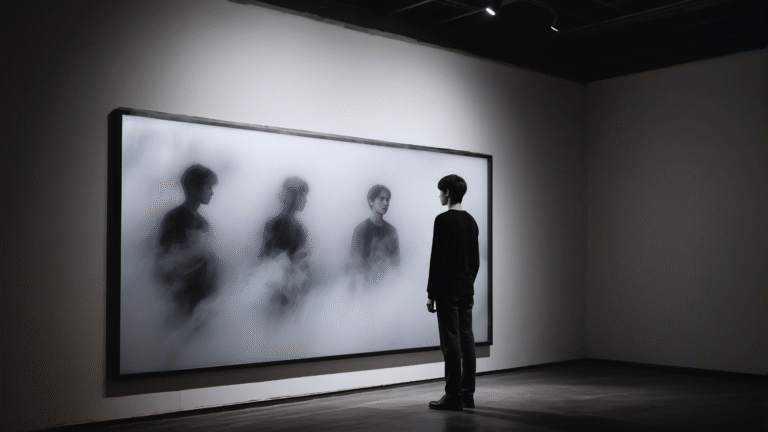
How to Create Art That Communicates Without Clutter: Essential Techniques for Clear Visual Messaging

Creating art that communicates clearly requires intentional simplicity. The key is to focus on a single message and remove any elements that do not support it. This clarity helps the viewer understand the artist’s intent without distraction. Artists achieve this…

  • Elisa
  • May 16, 2026
  • Artistic Style, Orientation

The Importance of Intentionality in Design Choices for Effective User Experience

Intentionality in design choices directly impacts how effectively a product or space communicates its purpose and meets user needs. When designers make deliberate decisions, every element serves a clear goal rather than being arbitrary or decorative. This focused approach ensures…

  • Elisa
  • May 2, 2026
  • Artistic Style

Tips for Curating Your Art for Digital Presentation: A Practical Guide to Showcasing Creativity Online

Curating art for digital presentation requires careful selection and thoughtful organization to ensure the work resonates on screen. It involves more than just uploading images; it demands attention to how each piece interacts with the digital space and with viewers’…

  • Elisa
  • April 18, 2026
  • Minimalist Art

Building a Minimalist Art Portfolio with Impact for Effective Visual Storytelling

Building a minimalist art portfolio requires intentional selection and thoughtful presentation of work. The goal is to create a strong visual impact through simplicity and coherence rather than volume. A minimalist portfolio focuses on quality and clarity, showcasing only the…

  • Elisa
  • April 4, 2026
  • Orientation

Portrait vs. Landscape: When to Use Each Format for Optimal Visual Impact

Choosing between portrait and landscape formats depends largely on the subject and purpose of the image. Portrait orientation works best for vertical subjects like people or tall objects, while landscape is ideal for wide scenes such as landscapes or group…

  • Elisa
  • March 21, 2026
  • Artistic Style, Orientation

Understanding Symmetry and Asymmetry in Design: Key Principles and Applications

Symmetry and asymmetry are fundamental principles in design that influence how a composition is perceived. Symmetry creates balance and harmony by mirroring elements, while asymmetry uses contrast and visual tension to engage the viewer. Understanding when and how to use…

  • Elisa
  • March 7, 2026
  • Artistic Style, Orientation

The Rule of Thirds and How to Break It Effectively for Creative Composition

The rule of thirds is a foundational guideline in visual composition, dividing an image into nine equal parts to help position key elements. It creates balance and guides the viewer’s eye, making photographs and designs more engaging. Breaking the rule…

  • Elisa
  • February 21, 2026
  • Orientation

How Orientation Affects Storytelling in Visual Art: Exploring Perspective and Narrative Flow

Orientation in visual art plays a crucial role in shaping how a story is conveyed and perceived. By changing the position or angle of an artwork, artists guide the viewer’s eye and influence the narrative flow. Orientation affects storytelling by…

  • Elisa
  • February 7, 2026
  • Artistic Style

Exploring Bold vs. Subtle Styles in Contemporary Art: A Clear Comparison of Visual Impact and Technique

Contemporary art encompasses a wide range of styles, with bold and subtle approaches often defining an artist’s message. Bold styles use strong colors, striking forms, and high contrast to grab immediate attention, while subtle styles rely on nuance, muted tones,…

  • Elisa
  • January 24, 2026
  • Artistic Style

How Color Choices Define An Artist’s Voice And Shape Creative Expression

Color choices play a crucial role in shaping an artist’s voice by communicating emotion, mood, and intention without words. Each shade an artist selects acts as a visual language that speaks directly to the viewer’s perception. The specific colors an…

  • Elisa
  • January 10, 2026
Prev
1 2 3 4 5 6
Next

Categories

  • Artistic Style
  • Minimalist Art
  • Orientation

Recent Posts

  • Understanding Color Theory for Emotional Resonance in Abstract Art: What Your Palette Really Says
  • Scale in Visual Art: Why Size Changes Everything
  • How Natural Light Shapes the Way Visual Art Is Created
  • How Minimalist Art Can Evoke Complex Emotions Through Subtle Visual Language
  • Exploring the Impact of Orientation in Digital Artwork: Influences on Perception and Composition

Copyright © - WordPress Theme by CreativeThemes