
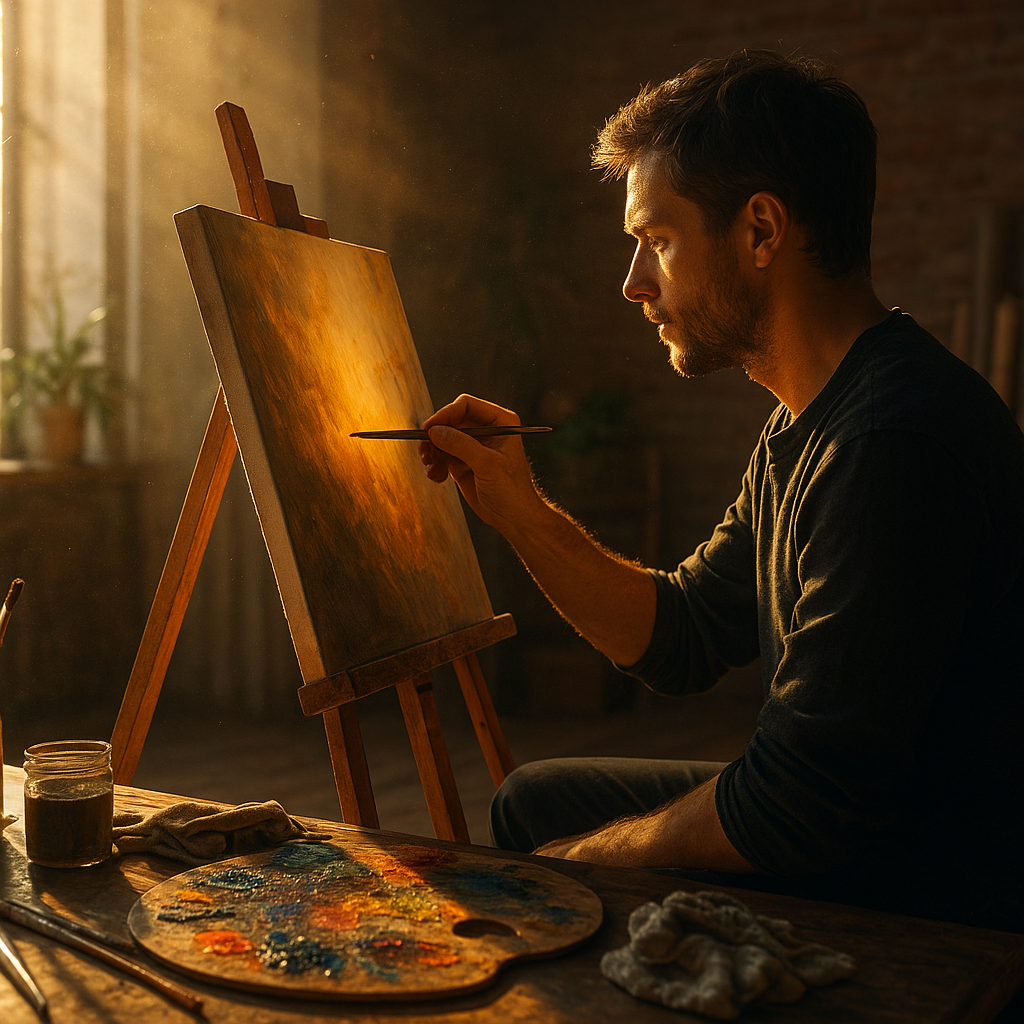
Step outside on a clear morning and watch how sunlight falls across a painting in progress — it tells a completely different story than it did the night before under a lamp. For artists working in any medium, light isn’t just a practical consideration. It’s an active force that shapes every creative decision, from the way color appears on canvas to the mood a finished piece ultimately conveys. Natural light, in particular, has been at the center of artistic practice for centuries, influencing everything from studio design to the philosophical underpinnings of entire movements.
Understanding how natural light works — and how it interacts with pigment, texture, and form — can genuinely transform the way a person creates visual art. This isn’t abstract theory. It’s something painters, illustrators, sculptors, and crafters encounter every single day in their practice.
Why Natural Light Has Always Mattered to Artists
Long before electric lighting existed, artists had no choice but to work by daylight. But what began as a practical necessity became something far more intentional. The great masters of the Renaissance and Baroque periods carefully positioned their studios to capture specific qualities of northern light — a diffused, consistent illumination that minimized harsh shadows and allowed for accurate observation of color and form.
The reason northern light was (and still is) so prized is straightforward: in the Northern Hemisphere, north-facing windows don’t receive direct sunlight throughout the day. Instead, they offer a steady, cool, and relatively neutral light source that doesn’t shift dramatically from morning to afternoon. This consistency was essential for artists who needed to observe their subjects over hours or even days without the colors and shadows constantly changing beneath them.
Johannes Vermeer is perhaps the most celebrated example of an artist who mastered the use of directional natural light. His interiors, lit almost exclusively from a single window source, demonstrate an extraordinary sensitivity to how daylight behaves — how it softens as it travels across a room, how it picks up the texture of fabric, how it subtly shifts the apparent color of skin.
How Natural Light Affects Color Perception
One of the most practically important ways natural light influences art creation is through its effect on color. Color is not a fixed property of objects — it’s the result of light reflecting off surfaces and entering our eyes. Change the light, and the color changes with it.
Natural daylight is often described as having a high Color Rendering Index (CRI), which essentially means it reveals colors more accurately and fully than most artificial light sources. Sunlight contains the full visible spectrum, allowing artists to see the true relationship between hues on their palette. Under tungsten bulbs or warm artificial lighting, cool blues and purples can appear muted or even slightly gray, while yellows and oranges may seem more vibrant than they actually are.
This matters enormously when mixing colors. An artist who mixes a flesh tone under warm artificial light may be surprised to discover that the same mixture looks distinctly different — sometimes even greenish or chalky — when viewed in daylight. Many artists have learned this lesson the hard way, finishing a piece in the evening only to reassess it the next morning under natural light.
The Impressionist Revolution and Natural Light
No conversation about natural light and visual art is complete without the Impressionists. Artists like Claude Monet, Pierre-Auguste Renoir, and Camille Pissarro took natural light from a passive tool to the central subject of their work. Monet’s famous series paintings — haystacks, the Rouen Cathedral, water lilies — were explicitly about documenting how natural light transformed the same subject at different times of day and in different seasons.
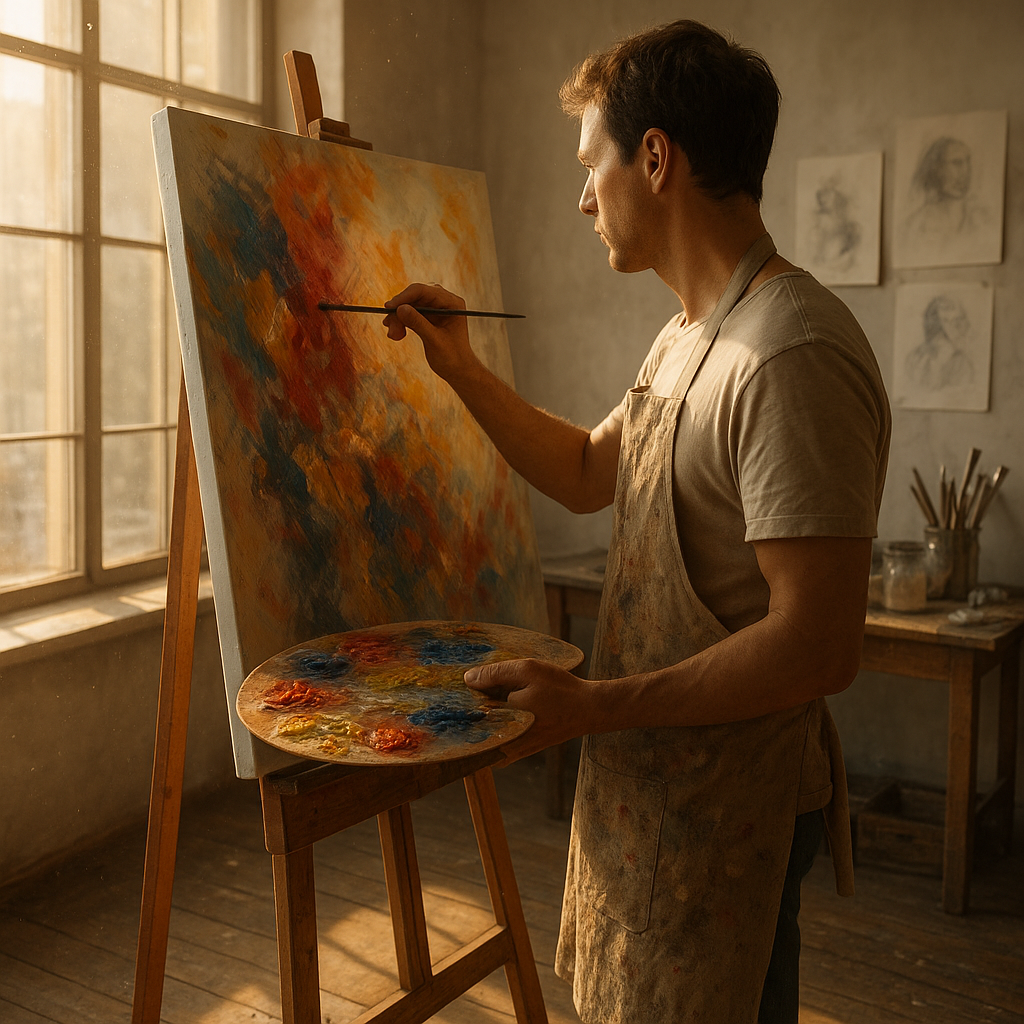
This approach was genuinely radical at the time. Academic painting treated light as a vehicle for revealing form. The Impressionists flipped that relationship: form became a vehicle for exploring light. By working en plein air (outdoors, in front of the subject), they were constantly grappling with shifting light conditions — something that forced them to develop a faster, more intuitive painting approach that became the hallmark of the movement. This evolution of style driven by external influences mirrors the way fashion shaped visual art styles across different periods in history.
Why Natural Light Is Important in Design
The importance of natural light extends well beyond painting into the broader world of design. Why is natural light important in design? In interior and spatial design, natural light defines how a space feels — its warmth, openness, and even its apparent size. Designers rely on it to create environments that feel welcoming, functional, and honest to the materials used within them.
In product and graphic design, understanding natural light helps designers anticipate how their work will be perceived across different viewing contexts. A color chosen under artificial studio lighting may not translate the same way when a printed piece is viewed in a sunlit room or a shaded hallway. This variability is why professional designers and printers use standardized lighting conditions when evaluating color accuracy.
For visual artists who create work intended for galleries, natural lighting considerations can also influence the work itself. Artists sometimes deliberately create pieces that are designed to shift under different light conditions — using metallic pigments, iridescent media, or layered glazes that catch and reflect light differently depending on the viewing angle and source.
The 70/30 Rule in Art and Its Connection to Light
Light and shadow are inseparable in visual art, and one of the most useful principles for managing that relationship is the 70/30 rule. What is the 70/30 rule in art? Simply put, it’s a compositional guideline suggesting that a well-balanced artwork should consist of approximately 70% of a dominant element — such as a light area, a primary color, or a specific tone — and 30% of a contrasting element. In terms of light and shadow, this might mean that 70% of a painting is illuminated and 30% falls into shadow, or vice versa.
This ratio creates visual harmony without monotony. When light and dark are distributed roughly equally across a composition, the eye tends to feel unsettled — there’s no clear resting point. The 70/30 rule gives the viewer a visual anchor while still maintaining interest through contrast. Understanding how such compositional guidelines interact with one another — for instance, how the rule of thirds can be broken effectively to amplify tension between light and dark areas — adds another layer of intentionality to an artist’s work.
Natural light often creates this kind of distribution organically. A figure standing near a window in a dim room may be flooded with light on one side, casting the opposite side into deep shadow — naturally producing that 70/30 dynamic that artists have been drawn to for centuries. Caravaggio’s dramatic use of chiaroscuro is perhaps the most extreme example: deep, consuming shadow with islands of intense natural-seeming light, often lit by a single high window source.
Practical Ways Natural Light Shapes the Creative Process
Beyond theory and art history, natural light has direct, practical implications for how artists set up their workspaces and approach their daily practice. Here are some of the most significant ways it actively shapes the creative process:
- Studio orientation: Many artists deliberately choose north-facing studios or position their easels to receive consistent indirect light throughout the working day, avoiding the color temperature shifts that come with direct sun.
- Time of day as a creative variable: Some artists work only in the morning when light is cooler and more neutral, while others prefer the golden warmth of late afternoon light for specific subjects or moods.
- Seasonal adaptation: Natural light changes significantly across seasons — shorter days and lower sun angles in winter create longer, softer shadows and a noticeably cooler, bluer quality of light. Many artists adjust their palette and subject matter accordingly.
- Plein air painting: Working outdoors forces artists to respond to constantly changing light conditions, which typically results in looser, more gestural work and a heightened sensitivity to light as a living, moving element.
- Photography and mixed media: Artists working with photography or incorporating photographic references need to understand how natural light affects their reference images — the color temperature and intensity of the light source in a photograph will influence every color decision made when translating it into paint or other media.
Adapting When Natural Light Isn’t Available
Not every artist has access to ideal natural light conditions. Many work in basements, apartments with limited windows, or during hours when daylight simply isn’t available. In these cases, understanding what makes natural light special allows artists to make more informed choices about artificial alternatives.
Full-spectrum daylight bulbs — designed to mimic the broad spectral output of natural sunlight — are widely used in studios as a practical substitute. Look for bulbs with a CRI of 90 or above and a color temperature between 5000K and 6500K to get reasonably close to the quality of natural north light. While they don’t perfectly replicate the experience of working in daylight, they provide a far more reliable color environment than standard warm-toned household lighting.
Light as Subject, Tool, and Collaborator
What makes natural light so uniquely compelling in the context of visual art is that it functions simultaneously as subject, tool, and creative collaborator. Artists don’t just work under light — they observe it, interpret it, and in many cases, their entire artistic identity is built around a relationship with it.
Edward Hopper’s paintings are defined by the particular quality of American sunlight — its starkness, its geometry, the way it carves hard-edged shadows through ordinary spaces. Turner practically dissolved form into light in his later work, pushing the boundaries of what a painting could depict. And contemporary artists continue to find new ways of engaging with natural light, from James Turrell’s large-scale light installations to hyperrealist painters who spend months studying the precise way light falls across everyday objects.
The relationship between natural light and art isn’t a relic of pre-electric history. It remains a living, evolving conversation at the heart of visual practice.
Conclusion
Natural light shapes visual art in ways that are both profound and practical. It governs how color is perceived, how shadow and form interact, and how entire artistic movements have developed over centuries. From Vermeer’s luminous interiors to Monet’s outdoor studies to the careful studio setups of contemporary painters, the quality and direction of light has always been a foundational creative consideration.
Understanding principles like the 70/30 rule helps artists use light and shadow with intention rather than accident. Knowing why natural light matters in design and studio practice allows for better decisions about workspace setup, time of day, and even the choice of materials. And appreciating the historical relationship between artists and daylight offers a richer understanding of why so many celebrated works look the way they do.
For anyone creating visual art — at any level — paying closer attention to the light in the room, on the canvas, and in the world outside is one of the most rewarding habits to develop. It’s free, it’s always changing, and it has been inspiring artists for as long as art has existed.