
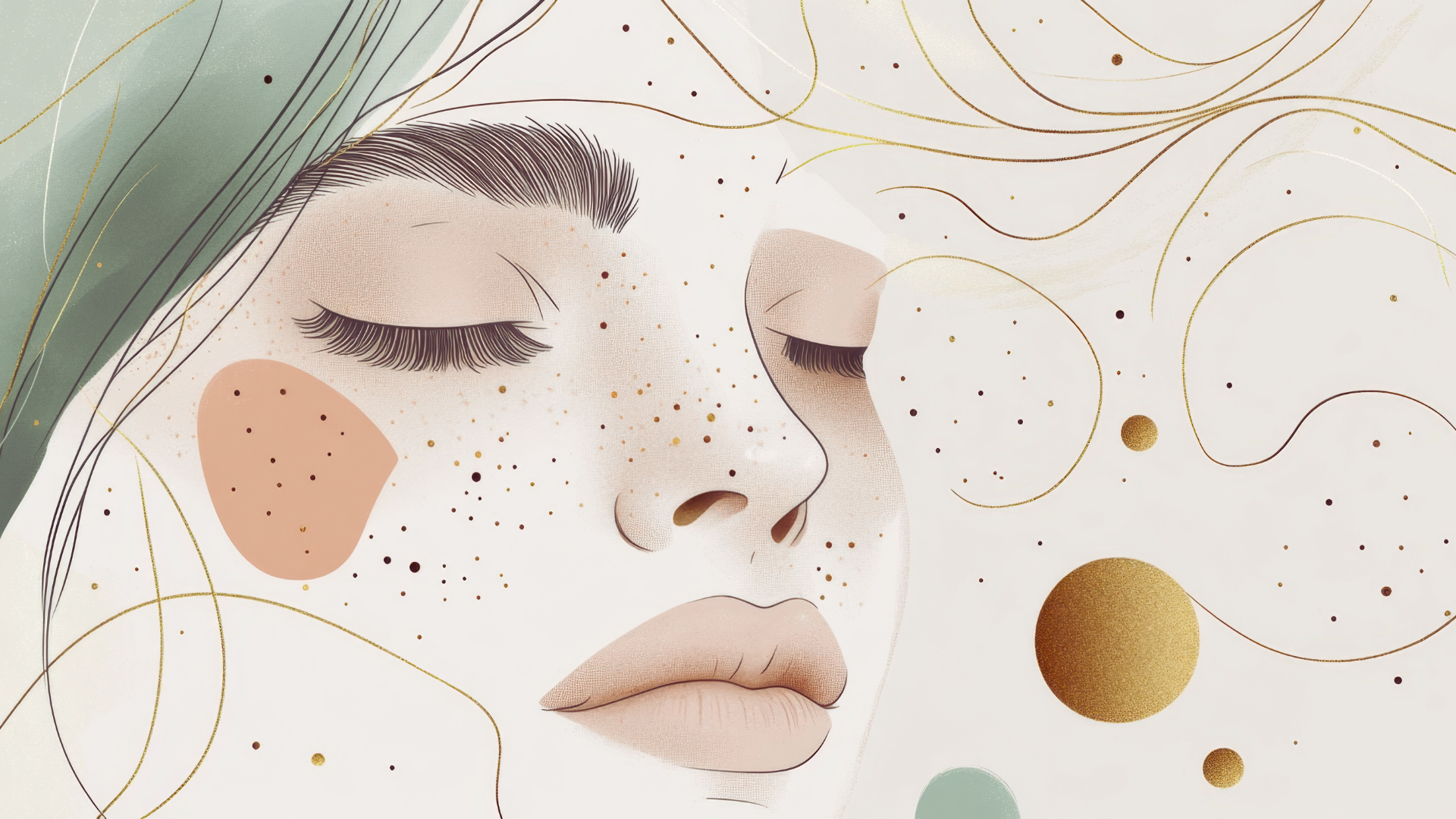
Minimalist art uses simplicity to deliver powerful emotional experiences. By stripping away unnecessary details, it invites viewers to engage more deeply with the core elements and find personal meaning. This ability to evoke complex emotions through restraint and focus is what makes minimalist art unique.
The sparse design allows emotions to surface without distraction. It prompts viewers to fill in the gaps, sparking reflection and a broad range of feelings. The subtlety of minimalist art often leads to a more thoughtful and intimate emotional reaction than more detailed works.
Minimalism’s effectiveness lies in how it balances form and emptiness. It communicates through what is left unsaid, encouraging an active emotional dialogue between the art and the observer.
The Essence of Minimalist Art
Minimalist art focuses on stripping away excess to emphasize pure form and space. It draws from specific historical influences while defining its unique visual language through simplicity and essential elements.
Origins and Evolution of Minimalism
Minimalism emerged in the late 1950s and early 1960s as a reaction against the emotional intensity of Abstract Expressionism. It sought to remove personal expression to focus on the artwork’s objectivity and spatial presence.
Artists like Frank Stella and Donald Judd emphasized geometric shapes and industrial materials. The movement grew as part of modern art’s shift toward conceptual clarity and reduction. Its roots trace back to earlier abstract and modernist tendencies, including Bauhaus and De Stijl, which favored simplicity and functionalism.
Minimalism expanded into contemporary art, influencing design, architecture, and music, reinforcing the idea that less can provoke focused, profound engagement.
Key Characteristics: Simplicity and Essential Forms
Minimalist art is defined by its clear, pared-down visuals. It uses basic shapes like squares, lines, and circles, often in monochromatic or limited color palettes. This deliberate reduction directs attention to form and spatial relationships.
Surface textures are generally smooth, and elements are arranged with precise balance. The absence of decorative details eliminates distraction, inviting viewers to concentrate on subtle variations in tone, scale, and material.
The movement values repetition and uniformity, which can generate a meditative or contemplative effect. By focusing on essentials, minimalist art invites complex emotional responses through simplicity.
Minimalist Art Versus Other Movements
Minimalism contrasts strongly with Abstract Expressionism, which prioritizes spontaneous, dramatic brushwork and emotional intensity. Where Abstract Expressionism is subjective and chaotic, minimalism is objective and orderly.
Compared to other modern art movements like Cubism or Surrealism, minimalist art avoids narrative and symbolism. It rejects the complexity of figurative or conceptual layers, favoring straightforward perception.
While it shares modern art’s abstraction, minimalism’s restraint sets it apart from contemporary art forms that often embrace multimedia and eclecticism. Its clarity and discipline provide a distinct aesthetic and emotional impact uncommon in more elaborate styles.
| Aspect | Minimalist Art | Abstract Expressionism | Other Modern Movements |
| Visual Style | Geometric, simple, essential | Expressive, dynamic, emotional | Varied, often complex |
| Emotional Approach | Subtle, contemplative | Intense, personal | Symbolic, narrative-driven |
| Materials | Industrial, uniform | Traditional, varied | Mixed |
| Artistic Goal | Objectivity, spatial awareness | Subjectivity, emotional content | Experimentation |
How Minimalist Art Evokes Complex Emotions
Minimalist art uses specific elements to create emotional depth despite its simplicity. It achieves this through careful attention to space, color, material, and visual clarity, allowing viewers to experience feelings ranging from calm to cognitive engagement.
Impact of Negative Space and Open Space
Negative and open space are crucial in minimalist art, shaping the viewer’s emotional response. Empty areas provide mental space for reflection, reducing cognitive load and inviting a sense of calm through simplicity.
These clean lines and sparse compositions emphasize what is present by contrast. The balance between filled and empty space creates tension or serenity, depending on arrangement, helping evoke complex feelings without explicit imagery.
Well-managed open space encourages viewers to slow down and engage emotionally with the artwork. It can suggest vastness, loneliness, or tranquility, depending on context, by prompting introspection rather than overwhelming details.
Role of Color Palettes and Materiality
Limited color palettes, often neutral or monochromatic schemes, focus attention and deepen emotional resonance. These choices prevent distraction, emphasizing form and space, while subtle shifts in tone can evoke different moods.
Materiality—the texture and surface quality—adds another emotional layer. Matte or smooth finishes impact visual perception, offering tactile associations that influence feelings like warmth or austerity.
Together, color and material impact the work’s visual impact and emotional clarity. They help establish a quiet but intense presence, allowing viewers to sense calm or subtle tension through restraint rather than excess.
Emotional Resonance Through Reduction
Minimalist reduction strips away the nonessential to highlight fundamental forms and ideas. This simplification encourages viewers to project personal emotions into the work, increasing emotional engagement.
By presenting only core elements, minimalist art fosters a direct connection. The lack of clutter opens room for multiple interpretations, where a single line or shape can carry profound emotional weight.
This process creates resonance that is both subtle and powerful. The viewer’s emotional response is amplified by what is not shown, making the minimalist approach effective in eliciting complex, layered feelings.
Calm and Clarity Versus Cognitive Load
Minimalist art balances calm and clarity against cognitive load. Limiting visual information reduces the mental effort required to process the work, which can produce a soothing effect.
However, this clarity is intentional and invites focus. It avoids overstimulation, allowing the mind to rest or concentrate, depending on the viewer’s interaction with the space and form.
This balance enhances emotional impact by making the artwork accessible yet thought-provoking. It supports a sense of calm while encouraging viewers to find meaning in simplicity, rather than distraction.
The Interplay Between Mindfulness and Minimalist Principles
Minimalist art often cultivates a calm environment that supports focused attention and clear mental presence. It encourages viewers to engage with simplicity while fostering awareness of both internal and external experiences.
Minimalist Art as Meditation and Mindfulness Practice
Minimalist art employs restrained elements that guide the viewer toward a meditative state. By reducing visual noise, it supports mindfulness practices that center on present moment awareness.
The deliberate use of space, color, and form invites contemplation without distraction. This art style can function like a meditation object, helping individuals anchor their focus and deepen their attention.
Artists who apply minimalist principles often aim to create works that encourage stillness and mental clarity. The absence of complexity serves as an invitation to slow down and observe subtle details and sensations.
Decluttering Mental Space Through Art
Minimalist art reflects the process of decluttering mental space by emphasizing essential elements only. This reduction aids in minimizing cognitive overload and promotes mental organization.
Viewers may find that exposure to minimalist creations helps clear intrusive thoughts, making it easier to process emotions or concentrate. The art’s simplicity mirrors the practice of clearing unnecessary mental clutter.
In this way, minimalist principles align with techniques used in mindfulness practices, such as focusing on a single object or breath. Both approaches prioritize simplicity to facilitate better psychological balance.
Mindful Viewing and Participation
Engagement with minimalist art requires active, mindful viewing rather than passive consumption. Observers are encouraged to notice subtle shifts in tone, texture, and composition.
Mindful participation involves observing without judgment, allowing emotions and thoughts to surface naturally. This process can deepen the emotional impact despite the art’s minimal form.
Such interaction enhances self-awareness and can cultivate greater appreciation for the present moment. Minimalist art becomes a tool that bridges sensory experience and mindful reflection.
Notable Minimalist Artists and Influences
Minimalist art developed through distinct approaches to material, form, and color. These approaches reveal how simplicity can generate emotional depth and spatial awareness. Several artists and traditions significantly shaped the movement’s principles and visual language.
Donald Judd: Material and Space
Donald Judd emphasized the physical properties of materials and their spatial relationships. His work used industrial materials like steel, aluminum, and Plexiglas, focusing on clean lines and repeated geometric forms. Judd’s pieces reject illusion, insisting that objects exist solely in space, inviting viewers to experience volume and emptiness simultaneously.
His “specific objects” illustrated this approach, being neither painting nor sculpture but objects defined by their presence in space. This focus on actual space over representation made viewers confront the materiality and structure without distraction.
Frank Stella: Geometric Forms and Lines
Frank Stella explored geometric shapes and lines to strip art down to its essentials. Known for his black pinstripe paintings in the late 1950s, Stella used repeated lines to define flat surfaces and momentum. He later expanded his work into shaped canvases and three-dimensional forms, maintaining a strict geometric vocabulary.
Stella’s use of symmetry and asymmetry creates rhythm and movement without narrative. His work underscores minimalism’s embrace of form as a self-sufficient subject and challenges traditional picture framing.
Agnes Martin and Ellsworth Kelly: Color, Grids, and Serenity
Agnes Martin focused on subtle grids and soft colors to evoke calmness and introspection. Her minimalist paintings often feature faint lines on monochrome fields, emphasizing meditative serenity rather than complexity. Martin’s restrained palette and repetitive patterns create emotional resonance through quiet structure.
Ellsworth Kelly, on the other hand, used bold shapes and pure color to generate direct emotional responses. His work isolates color fields and geometric shapes, stripping away decorative elements. Both artists highlight how minimal design can communicate feeling through controlled form and color contrast.
Bauhaus and Broader Influences on Minimalism
The Bauhaus school influenced minimalist artists through its dedication to functional design and the unity of art, craft, and technology. Bauhaus principles encouraged clarity, geometry, and the merging of artwork with its environment, which minimalist artists embraced.
Minimalist design also relates to modernism’s rejection of ornament and complexity. These influences helped minimalism develop its focus on simplicity, repeatable shapes, and an emphasis on the viewer’s interaction with space and form. The legacy of Bauhaus extends in the minimalist insistence on form’s honesty and effective use of geometry.