
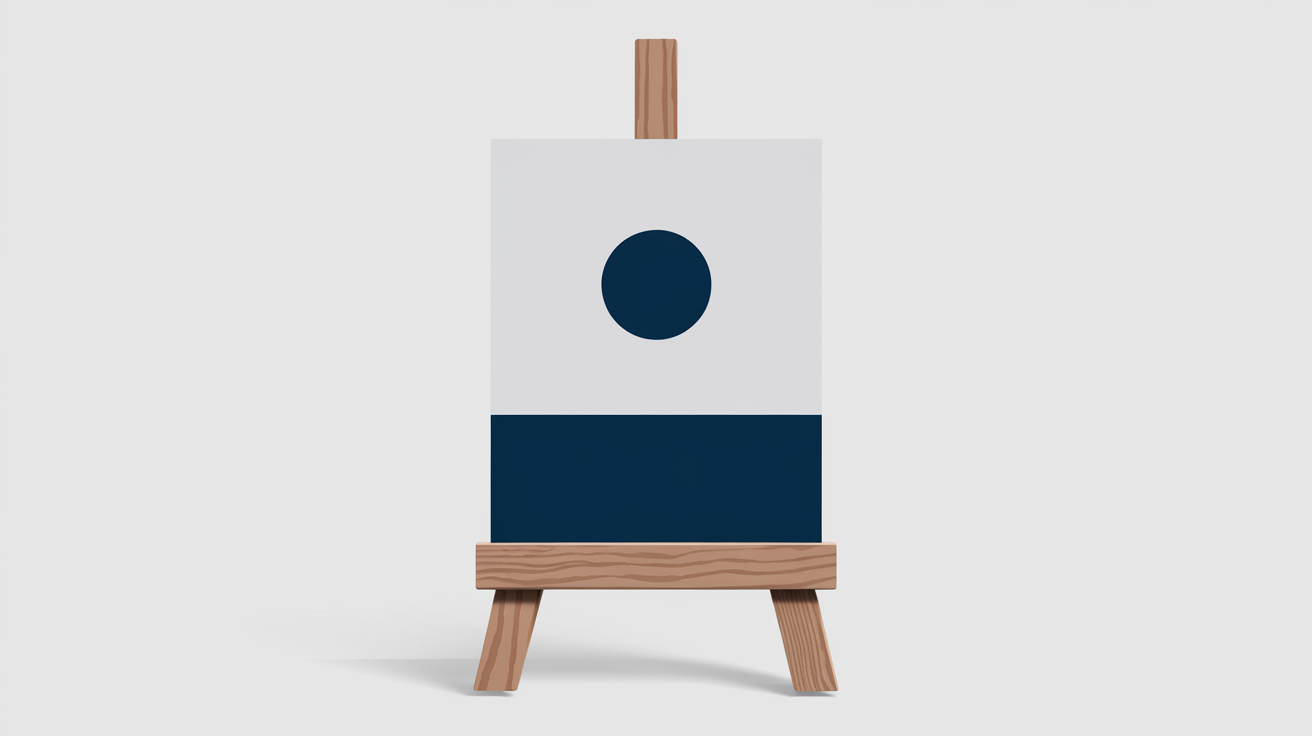
In a world often overwhelmed by noise, clutter, and excess, minimalistic art stands as a serene rebellion. It strips away the unnecessary, leaving only the essence of form, color, and emotion. Rooted in the idea that “less is more,” minimalistic art is not just a style—it’s a philosophy that challenges us to find beauty in simplicity. But what makes this art form so captivating, and why does it continue to resonate in our modern world? Let’s explore the origins, principles, and enduring influence of minimalistic art.
The Origins of Minimalistic Art
Minimalism as an art movement emerged in the mid-20th century, primarily in the 1960s, as a reaction against the complexity and emotional intensity of abstract expressionism. Artists sought to create works that were devoid of personal expression, focusing instead on pure form and material. Pioneers like Donald Judd, Agnes Martin, and Dan Flavin embraced industrial materials, geometric shapes, and repetitive patterns to create art that was both stark and profound.
The movement was heavily influenced by Japanese aesthetics, particularly the concept of ma (negative space) and the Zen philosophy of simplicity. These ideas emphasized the importance of emptiness and the spaces between objects, which became central to minimalist art.
Key Characteristics of Minimalistic Art
Minimalistic art is defined by its simplicity, but this simplicity is deliberate and deeply intentional. Here are some of its key characteristics:
- Simplicity of Form: Minimalist works often feature geometric shapes—squares, rectangles, circles—rendered with clean, precise lines.
- Limited Color Palette: Artists typically use monochromatic or muted color schemes, avoiding unnecessary distractions.
- Focus on Material: The materials themselves—whether it’s steel, glass, or canvas—are often left raw and unadorned, highlighting their inherent qualities.
- Repetition and Pattern: Repeating elements create rhythm and harmony, drawing the viewer’s attention to the subtle variations within the repetition.
- Emphasis on Space: Negative space is as important as the objects themselves, creating a sense of balance and calm.
The Impact of Minimalistic Art
Minimalistic art has transcended its origins to influence a wide range of disciplines, from architecture and interior design to fashion and lifestyle. In architecture, figures like Ludwig Mies van der Rohe and Tadao Ando have embraced minimalist principles, creating structures that are both functional and aesthetically serene. In design, the minimalist approach has given rise to sleek, user-friendly products that prioritize functionality over ornamentation.
Beyond its aesthetic appeal, minimalistic art encourages us to rethink our relationship with material possessions and the spaces we inhabit. In a culture often defined by consumerism, minimalism offers a refreshing alternative—a reminder that we don’t need much to live a meaningful and beautiful life.
Creating Your Own Minimalistic Art
If you’re inspired to try your hand at minimalistic art, here are a few tips to get started:
- Start Simple: Focus on basic shapes and forms. A single line or circle can be incredibly powerful.
- Limit Your Palette: Choose one or two colors and explore their potential.
- Embrace Negative Space: Don’t be afraid of empty areas—they can enhance the impact of your work.
- Experiment with Materials: Use materials in their rawest form to highlight their natural beauty.
- Practice Restraint: Resist the urge to add more. Sometimes, the most powerful statement is the simplest one.
Conclusion
Minimalistic art is more than just a visual style—it’s a way of seeing and experiencing the world. By stripping away the excess, it reveals the profound beauty of simplicity and invites us to pause, reflect, and appreciate the essence of things. In a world that often feels chaotic and overwhelming, minimalistic art offers a moment of calm and clarity. Whether you’re an artist, a designer, or simply someone who appreciates beauty, there’s something deeply inspiring about the power of less.